Mercedes AMG Menu Activation for Better Control
A Mercedes can have far more capability sitting inside its control units than the factory menu structure reveals. Mercedes AMG menu activation is a targeted coding service for drivers who want access to supported AMG-style displays, performance data, and vehicle settings without guessing at software menus or risking an incorrect configuration.
For Mercedes and AMG owners, the appeal is obvious: the cabin should feel as special as the vehicle looks and drives. A properly configured performance menu can put relevant information closer at hand, sharpen the digital experience, and make the car feel more tailored to the person behind the wheel. But it is not a universal one-click feature, and it is not a substitute for real engine or transmission tuning. Compatibility, vehicle hardware, software version, and the factory options on your specific car all matter.
What Mercedes AMG Menu Activation Actually Does
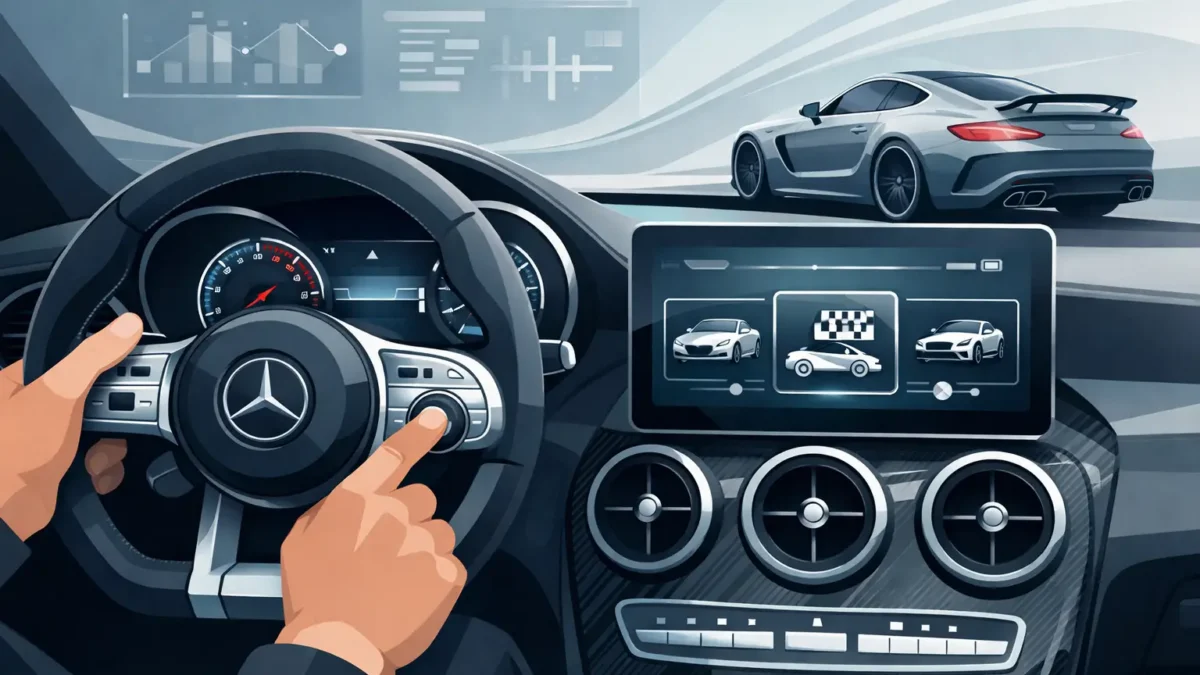
Mercedes AMG menu activation generally refers to coding supported AMG-related pages into the instrument cluster, central display, or both. Depending on the model, generation, and equipment, these pages may show performance-oriented data such as engine output figures, torque information, boost pressure, fluid temperatures, G-force readings, acceleration timers, or AMG-inspired display layouts.
The exact result varies widely. A newer MBUX-equipped Mercedes may support different menus than a COMAND-equipped model, while a genuine AMG may have functions that cannot be replicated on a non-AMG vehicle simply through coding. Some cars already contain the necessary software but have the menu hidden by market configuration or option coding. Others require hardware that is not installed, or a control-unit software level that does not support the requested display.
That distinction matters. The right approach is not to force every possible menu into the car. It is to identify what your Mercedes can genuinely support, activate it cleanly, and confirm that the vehicle still communicates properly across its electronic systems.
Why Drivers Want the AMG Performance Menu
Factory Mercedes interfaces are polished, but they can be conservative. Performance data may be buried, unavailable, or reserved for a higher trim level despite the vehicle having a capable digital cluster and infotainment system. AMG menu activation gives an enthusiast more direct interaction with the vehicle’s performance side.
For a driver with an ECU remap, TCU tune, or other performance upgrades, live temperature and power-related screens can add useful context to the driving experience. They are not a replacement for professional datalogging or a dedicated diagnostic tool, but they can make everyday monitoring more engaging. Seeing relevant vehicle data in the factory display also preserves the clean interior design that attracted many owners to Mercedes in the first place.
There is also a personalization factor. A performance-oriented cluster layout, added drive-data page, or supported AMG visual theme can make the car feel more intentional. It is a detail, but details are the difference between a luxury vehicle that is merely well equipped and one that feels built around its owner.
AMG Menu Activation Is Not the Same as an AMG Conversion
This is where clear expectations are essential. Coding a menu does not transform a C 300, E 450, GLE 53, or any other Mercedes into a full AMG model. It does not add AMG hardware, larger brakes, a different turbocharger, upgraded cooling, engine internals, or the chassis calibration developed for a factory AMG.
Likewise, a displayed horsepower or torque value is often a calculated or preset infotainment value rather than a live dyno measurement. It may look impressive, but it should not be treated as proof of the vehicle’s actual output. If your vehicle has been tuned, the displayed factory-style values may not automatically reflect the new calibration.
The value of Mercedes AMG menu activation is access and personalization. It brings supported information and interface options into view. For actual gains in horsepower, torque, throttle response, or transmission behavior, that is where properly developed ECU and TCU calibration work comes in.
Compatibility Comes Before Coding
Before any coding work begins, a specialist should establish the vehicle’s chassis, model year, head-unit generation, instrument cluster type, factory option list, and current software condition. Mercedes uses multiple electronic architectures across its lineup, and small differences in production date or equipment can change what is possible.
A digital cluster is not a guarantee that every AMG screen can be enabled. A vehicle may need a certain head unit, a particular display package, or a compatible control module. In some cases, the menu can be activated but the underlying data source is unavailable, leaving sections blank or causing error messages. In other cases, a later dealer software update can change the configuration and require the coding to be checked again.
The best outcome comes from a vehicle-specific assessment rather than a generic promise. If a feature is supported, it should be coded with the correct configuration values and tested afterward. If it is not supported, the honest answer is that the feature should not be forced into the car.
Common Factors That Affect Support
The most relevant factors are the vehicle generation, whether it uses COMAND or MBUX, its factory digital displays, installed modules, regional coding, and current software version. Genuine AMG models, AMG Line vehicles, and standard Mercedes trims can all have different available paths.
Factory options also matter. For example, a car equipped with advanced driver displays may support more visual configurations than one with a basic cluster. Performance-related screens can also differ between sedans, coupes, convertibles, and SUVs, even when they share an engine family.
What a Proper Coding Session Should Include
Mercedes control-unit coding is precise work. The vehicle uses a network of modules that must remain aligned, so a professional session is more than connecting a scanner and selecting a menu item. A stable power supply, correct diagnostic access, module backups where appropriate, and post-coding checks all protect the vehicle and the result.
At GSW Performance, the goal is to configure supported hidden features around the way you use your vehicle, not overload the system with questionable changes. That may mean AMG menu activation on its own, or it may be combined with other compatible display, comfort, lighting, warning, or infotainment adjustments during the same appointment.
After coding, the menus should be verified from the driver’s seat. The cluster and central screen should load correctly, normal functions should remain available, and no new warning messages should appear. A quality installation feels factory-integrated because it works predictably every time you start the car.
The Trade-Offs to Consider
Performance menus are exciting, but they are not always the right modification for every owner. If your priority is discreet luxury, you may prefer a clean factory display over extra gauges and acceleration screens. If you track the car regularly, you may want more meaningful monitoring from dedicated instrumentation rather than relying on infotainment displays.
There is also the question of future software updates. Dealer programming, module replacement, or certain diagnostic procedures can overwrite coding changes. That does not mean the activation was done incorrectly. It means modern Mercedes software is constantly managed across multiple control units, and custom configurations may need to be reapplied after major updates.
Finally, never treat a menu activation as a reason to bypass safety systems or ignore maintenance. Temperature data is useful because it helps you understand the vehicle, not because it gives you permission to push a cold engine or transmission harder. The best performance upgrade is one that respects the mechanical limits of the car.
Pairing the Menu With Real Performance Improvements
Mercedes AMG menu activation makes the interior experience more performance-focused. ECU remapping and TCU tuning change how the vehicle responds on the road. The two can complement each other, especially for owners who want stronger midrange torque, improved throttle behavior, sharper shift response, or a more engaging drive mode strategy.
Still, the modifications should be planned in the correct order. Start with the health of the vehicle: resolve fault codes, confirm service items, inspect for leaks, and make sure ignition, fueling, cooling, and transmission systems are ready for the intended use. Then choose coding and calibration changes that match your goals, fuel quality, driving habits, and tolerance for a more aggressive setup.
A daily-driven luxury SUV may benefit from smoother transmission behavior and useful display access. A weekend performance sedan may call for a more assertive engine and TCU calibration, with the AMG performance screens serving as an added driver-focused touch. The right specification is personal.
Get the Features Your Mercedes Was Built to Support
The most satisfying Mercedes upgrades are the ones that feel native to the car. When AMG menu activation is compatible with your vehicle, it can add a sharper, more connected layer to every drive without cluttering the cabin or compromising normal operation.
Bring your vehicle details, your goals, and a clear idea of how you drive. A proper assessment can separate the features that look good in a screenshot from the ones that will genuinely make your Mercedes feel more like your own.